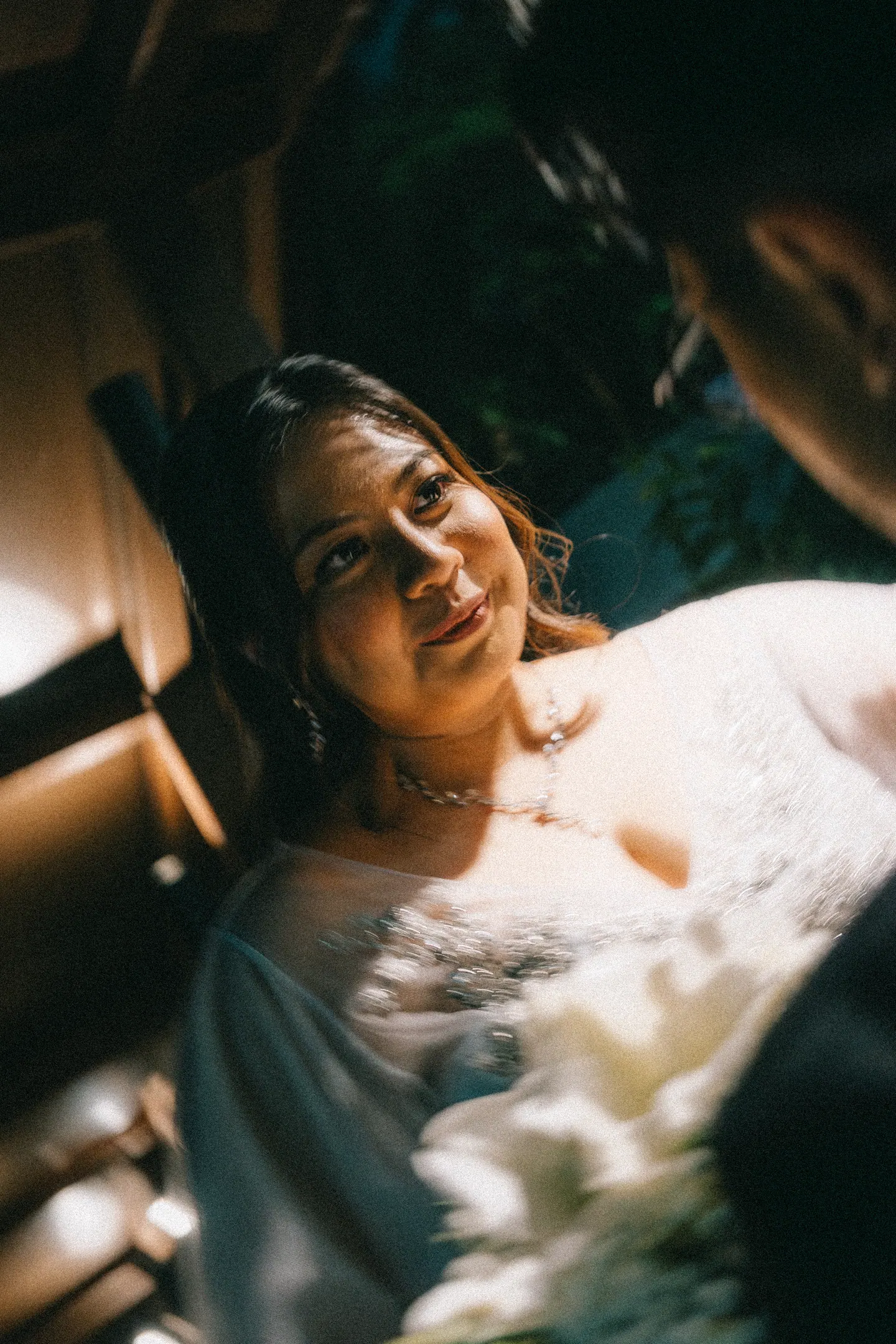
How to Plan Your Wedding Day Photography Timeline in Singapore
On your wedding day, time moves faster than you expect. Between getting ready, ceremonies, family, travel and a reception, a schedule that looked relaxed on paper can quickly fill up. When the day runs behind, photographs are often the first thing to be rushed. (If you are still choosing a photographer, see our 10 questions to ask before booking.)
A well-planned timeline makes sure the moments you care about have the time they deserve, and lets you enjoy the day instead of watching the clock. Here are the nine parts of a typical Singapore wedding day, the photographs to plan for in each, and tips to keep everything on track.
1. Getting Ready
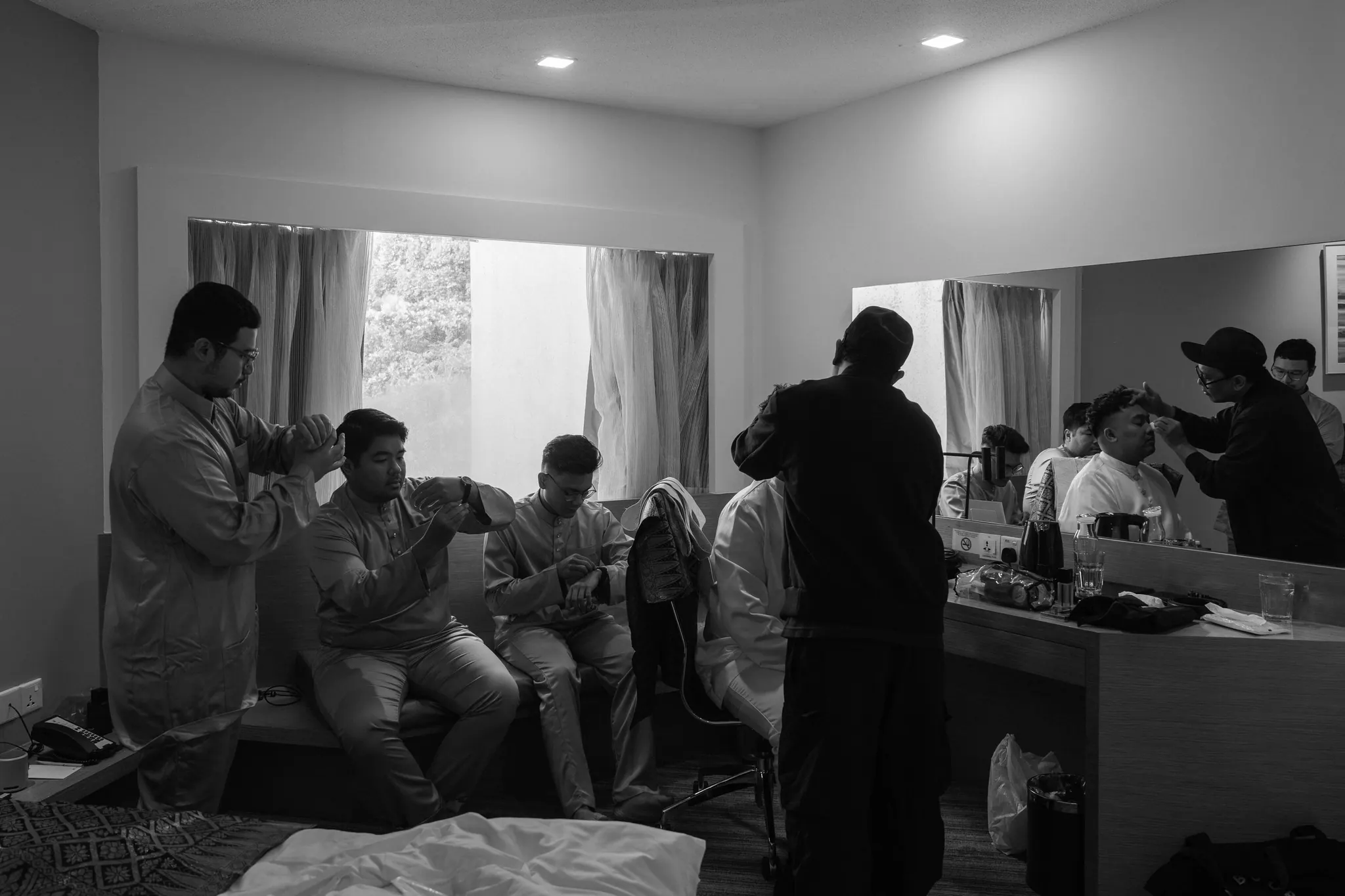
The quiet hour before everything begins is often where the most natural photographs happen: final touches, nervous laughter and family drifting in and out.
Photographs to plan for:
- Details: rings, outfits, shoes, jewellery and invitations.
- Final touches: make-up, hair, buttons and accessories.
- Family: parents seeing you ready for the first time.
Tip: put all the details in one box the night before, so they can be photographed quickly without anyone searching for them.
2. Arrival and Gatecrash
The groom’s arrival, door games and the first meeting bring some of the most energetic, funny moments of the day.
Photographs to plan for:
- Arrival: the groom and his party arriving.
- Games: reactions, laughter and good-natured chaos.
- The first look: the moment the couple see each other.
Tip: where you can, hold the games somewhere with good light, near windows or doors rather than a dim corridor.
3. The Solemnisation
Whether it is an akad nikah, a civil solemnisation or a religious ceremony, this is the heart of the day, and it is often shorter than you expect. In the weddings Khai has photographed, the ceremony itself has taken around twenty to thirty minutes.
Photographs to plan for:
- The vow: expressions, close enough to see emotion.
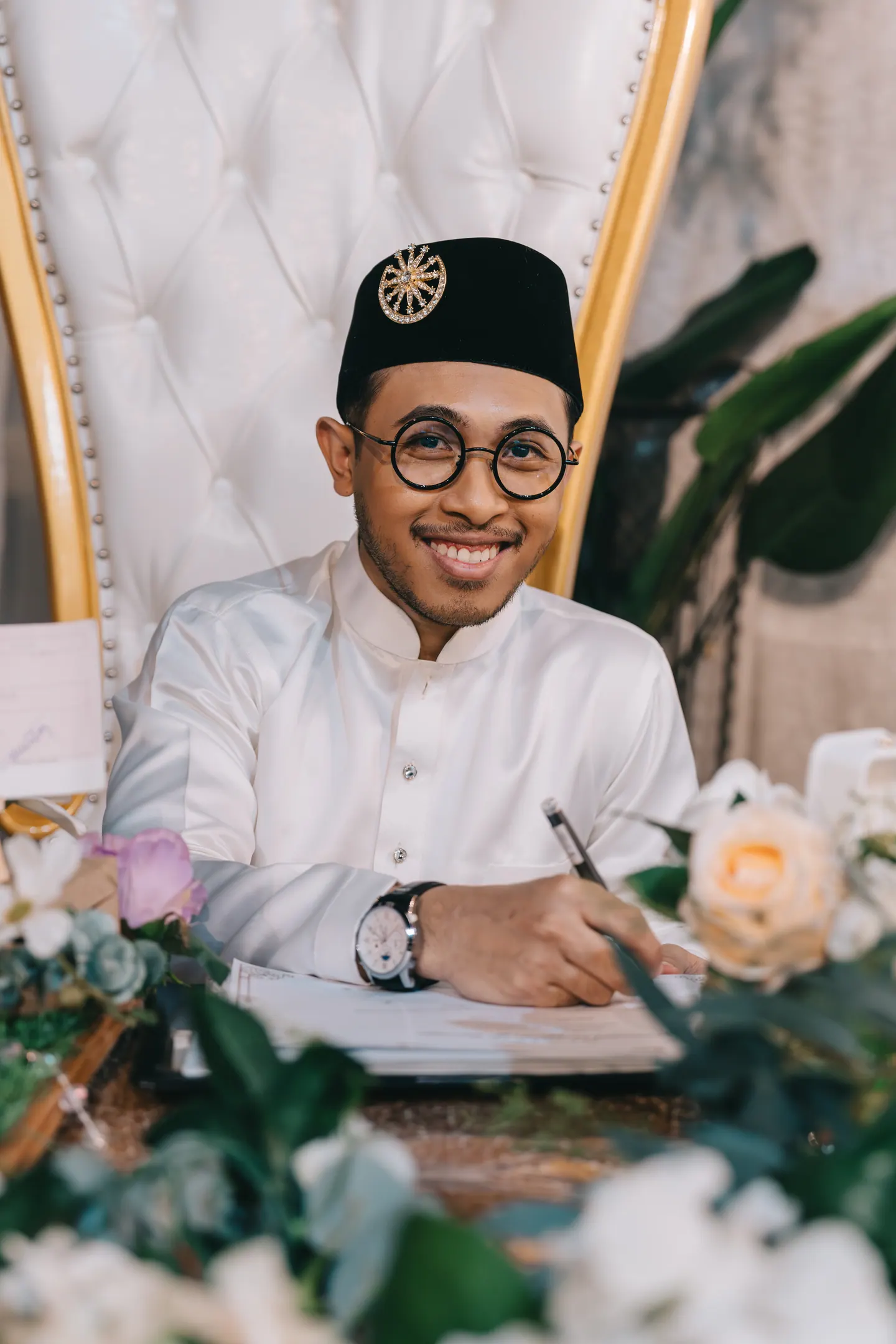
- The signing: hands, the pen and the witnesses.
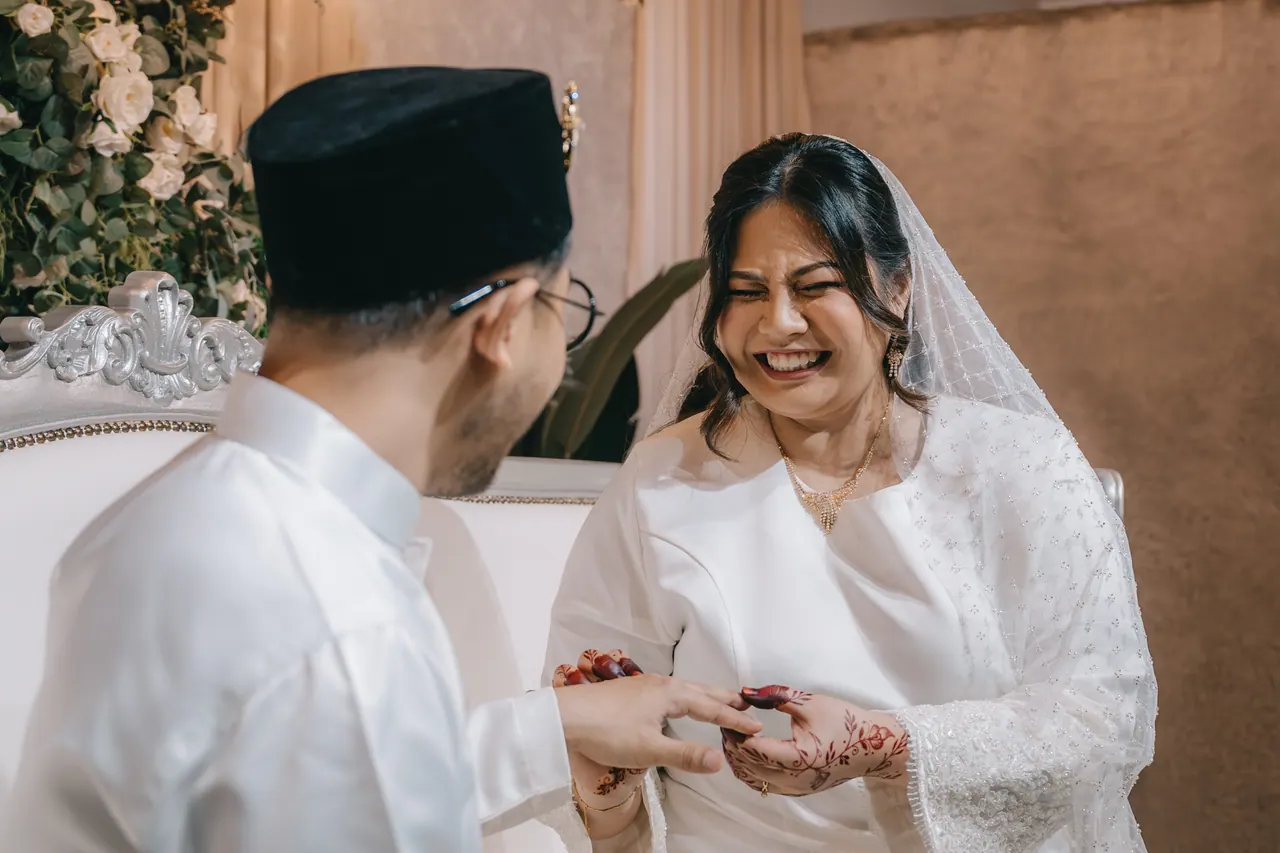
- The rings: often the moment the nerves break into smiles.
Tip: share the order of the ceremony with your photographer in advance, so they are in position before each moment. Our guide to solemnisation photography has more detail.
4. Tea Ceremony
A tea ceremony honours parents and elders and welcomes the couple into each family. It moves quickly, with many people in a short time.
Photographs to plan for:
- Serving tea: each pair of elders in turn.
- Blessings: red packets, jewellery and kind words.
- Reactions: the family watching from the side.
Tip: ask one organised relative to call family members up in order, so nobody is missed and the ceremony keeps moving.
5. Family Photographs
Family groups are important to parents and grandparents, and they are the part of the day most likely to take longer than planned.
Photographs to plan for:
- Immediate family: parents and siblings on both sides.
- Extended family: grandparents, aunts, uncles and cousins.
- Friends: your closest friends together.
Tip: write a family photograph list and give it to someone who knows everyone. It is the single biggest time-saver of the day.
6. Couple Portraits
A short, quiet session with just the two of you, often the calmest part of the day.
Photographs to plan for:
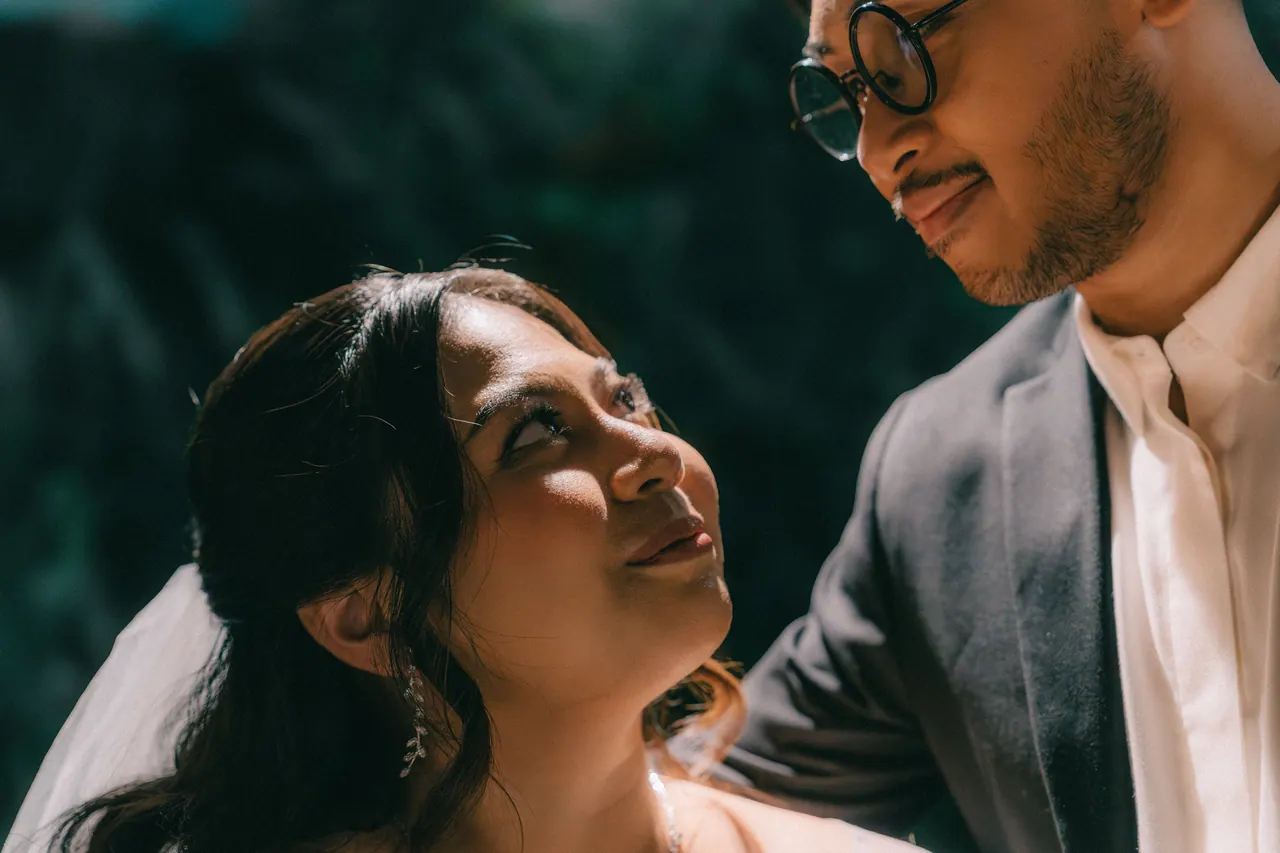
- Close portraits: the two of you, relaxed.
- Outfits: your wedding attire, while it still looks fresh.
- Setting: your venue or somewhere nearby.
Tip: twenty minutes in good light is worth more than an hour in a rush. Late afternoon, before sunset at around seven, is ideal.
7. Bersanding, Procession or March-In
The grand entrance in front of your guests, whether a bersanding on the dais, a procession with kompang, or a march-in at a banquet.
Photographs to plan for:
- The entrance: the procession or march-in as it happens.
- Guests: faces turned towards you.
- The dais or stage: the two of you, seated or standing together.
Tip: let your photographer know the route and timing in advance, so they can be waiting ahead of you.
8. Speeches, Toasts and Cake
The reception brings speeches, toasts, cake cutting and, at many Chinese weddings, a rousing yam seng.
Photographs to plan for:
- Speeches: the speaker and the reactions around them.
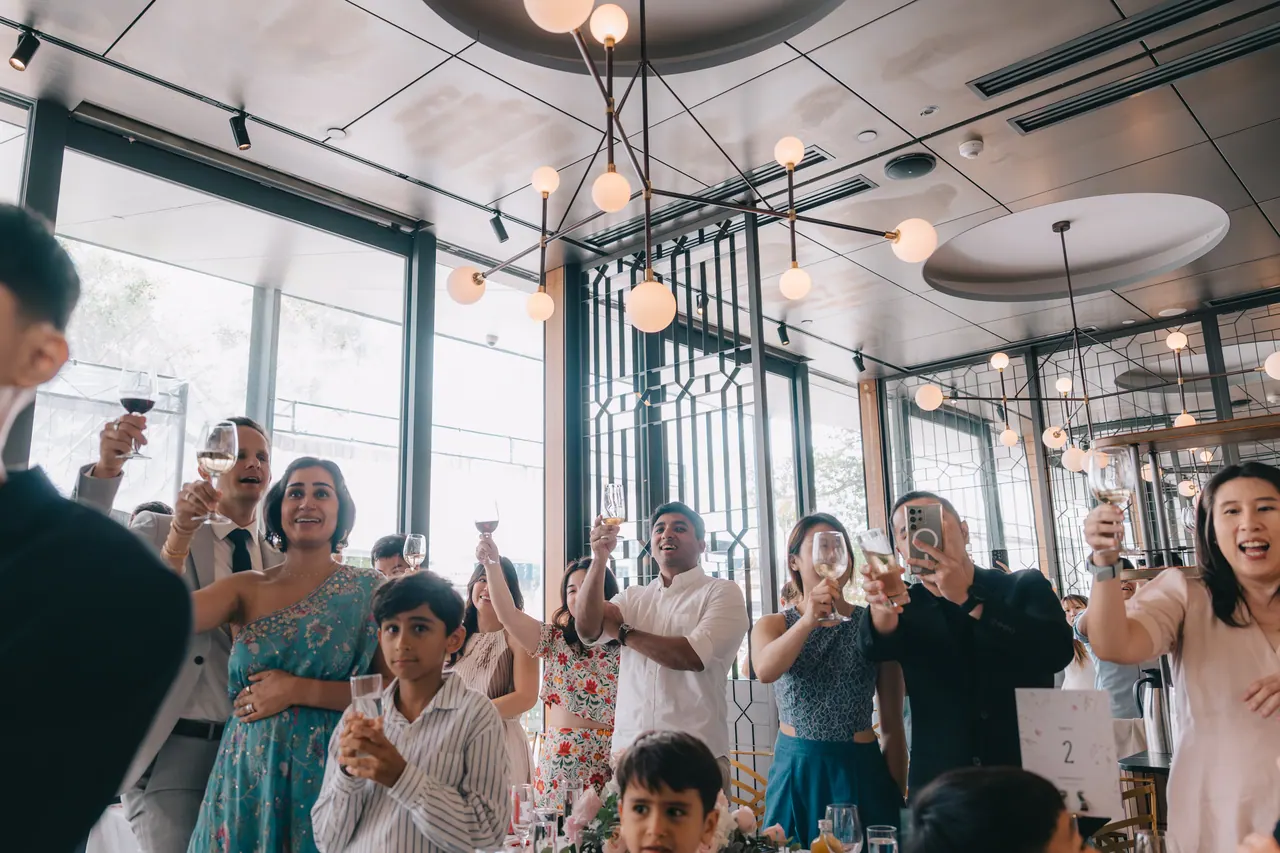
- Toasts: glasses raised, the whole room on its feet.
- Cake: the cutting, and the laughter that follows.
Tip: keep the head table clear of bottles and clutter, which end up in every picture.
9. The Send-Off
The end of the day, as guests leave and you finally have a moment to breathe.
Photographs to plan for:
- Goodbyes: hugs and thanks at the door.
- Last moments: the two of you, tired and happy.
- Details: the room after the celebration.
Tip: if your coverage ends before the send-off, decide in advance which moment matters most, and plan the timing around it.
Conclusion
A good wedding-day timeline is not about squeezing in more; it is about giving the important moments room to breathe. Write down the fixed points, add fifteen to thirty minutes of buffer before each one, and share the plan with your photographer.
Before the wedding, Khai sends his couples a guide to help plan the day, including the best moments for couple photographs. You can see how real days unfold in his wedding stories, or get in touch to talk through yours.